Healthcare leaders today are operating in an environment where financial pressure, workforce strain, and regulatory scrutiny are colliding all at once. Organizations are being asked to do more with fewer resources while simultaneously defending reimbursement, improving access to care, maintaining provider satisfaction, and preparing for increasingly aggressive payer and government oversight. For many compliance and operational leaders, one of the biggest concerns is not whether audits will occur, but whether their organization is prepared when they do.
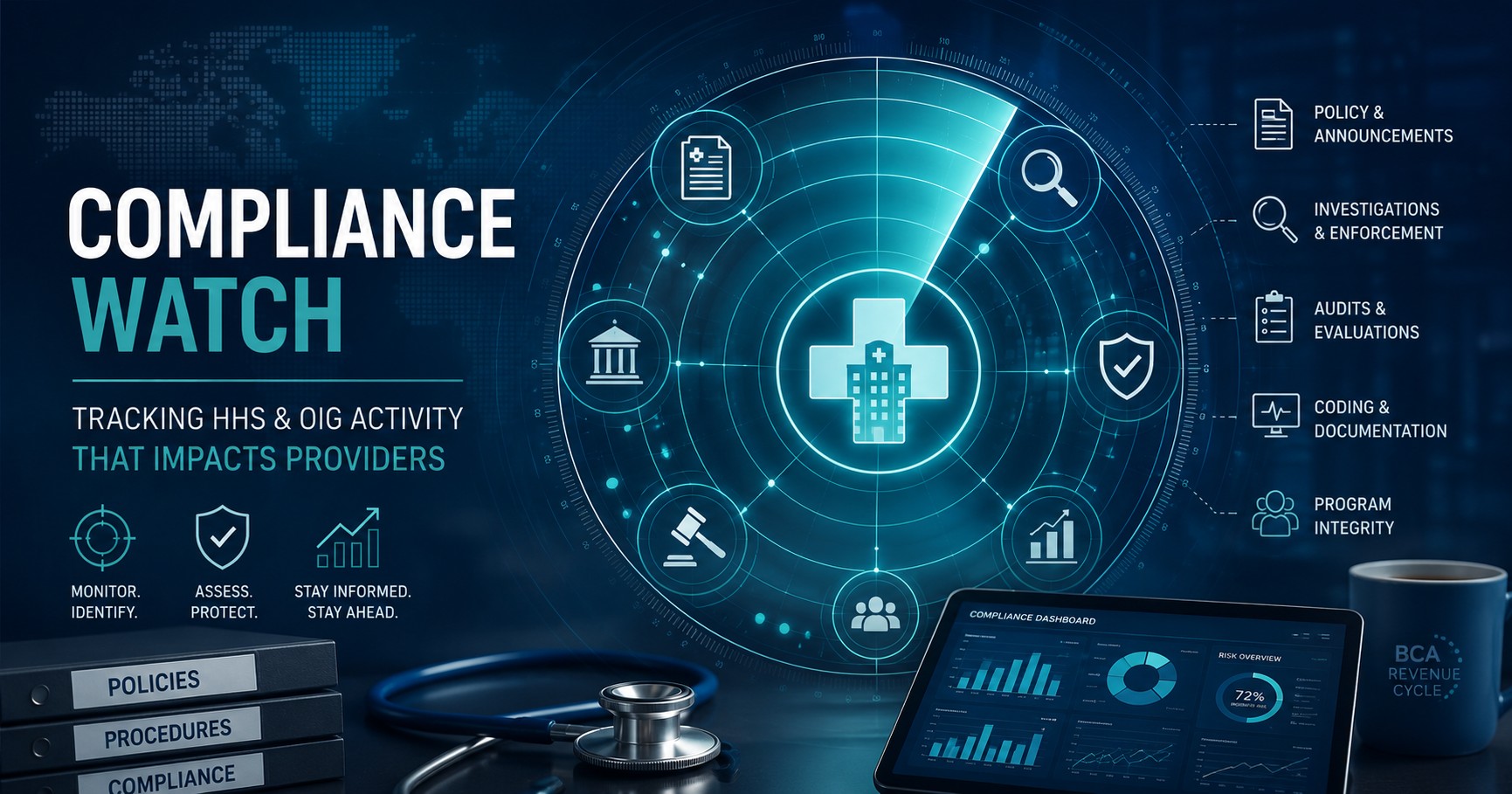
In this landscape, the Office of Inspector General (OIG) Work Plan has become more important than ever. The Work Plan serves as a roadmap of the audits, evaluations, and investigations currently underway or planned by the OIG. Updated throughout the year, it highlights areas the government believes may be vulnerable to fraud, waste, abuse, billing inaccuracies, or quality concerns. While inclusion on the Work Plan does not guarantee widespread audits, it often signals where enforcement attention and compliance expectations are heading next.
Several recent OIG Work Plan updates deserve close attention from healthcare organizations.
One major focus continues to center on Medicare Advantage oversight, particularly surrounding health risk assessments (HRAs), diagnosis reporting, and continuity of care. OIG has expressed concerns that some organizations may be capturing diagnoses that increase risk-adjusted reimbursement without sufficient evidence of ongoing treatment, monitoring, or care coordination. For providers, this reinforces the importance of accurate diagnosis specificity, complete documentation, and strong risk adjustment compliance processes.
Behavioral health services are also receiving heightened attention. Recent Work Plan additions include reviews of behavioral health provider access, telehealth utilization, and Certified Community Behavioral Health Clinic (CCBHC) reimbursement compliance. These projects reflect growing federal concern about whether patients can access medically necessary services and whether organizations are meeting reimbursement and program requirements appropriately.
In addition, OIG continues expanding oversight of remote patient monitoring, chronic care management, and evaluation and management services. Audits targeting modifier usage, same-day services, medical necessity, and time documentation suggest organizations should expect closer review of both coding accuracy and supporting documentation.
Taken together, these Work Plan priorities point to broader compliance trends: increased scrutiny around risk adjustment, telehealth and technology-based services, behavioral health reimbursement, and documentation integrity overall. The organizations that will be best positioned moving forward are those taking a proactive—not reactive—approach to compliance.
At BCA, Inc., our audit, education, and consulting services are designed to help healthcare organizations identify vulnerabilities before external auditors do. Through provider education, coding and documentation reviews, and compliance-focused consulting, we help organizations strengthen documentation integrity, reduce regulatory risk, and build sustainable processes that support both compliance and operational success.
Schedule a consultation with one of our experts.