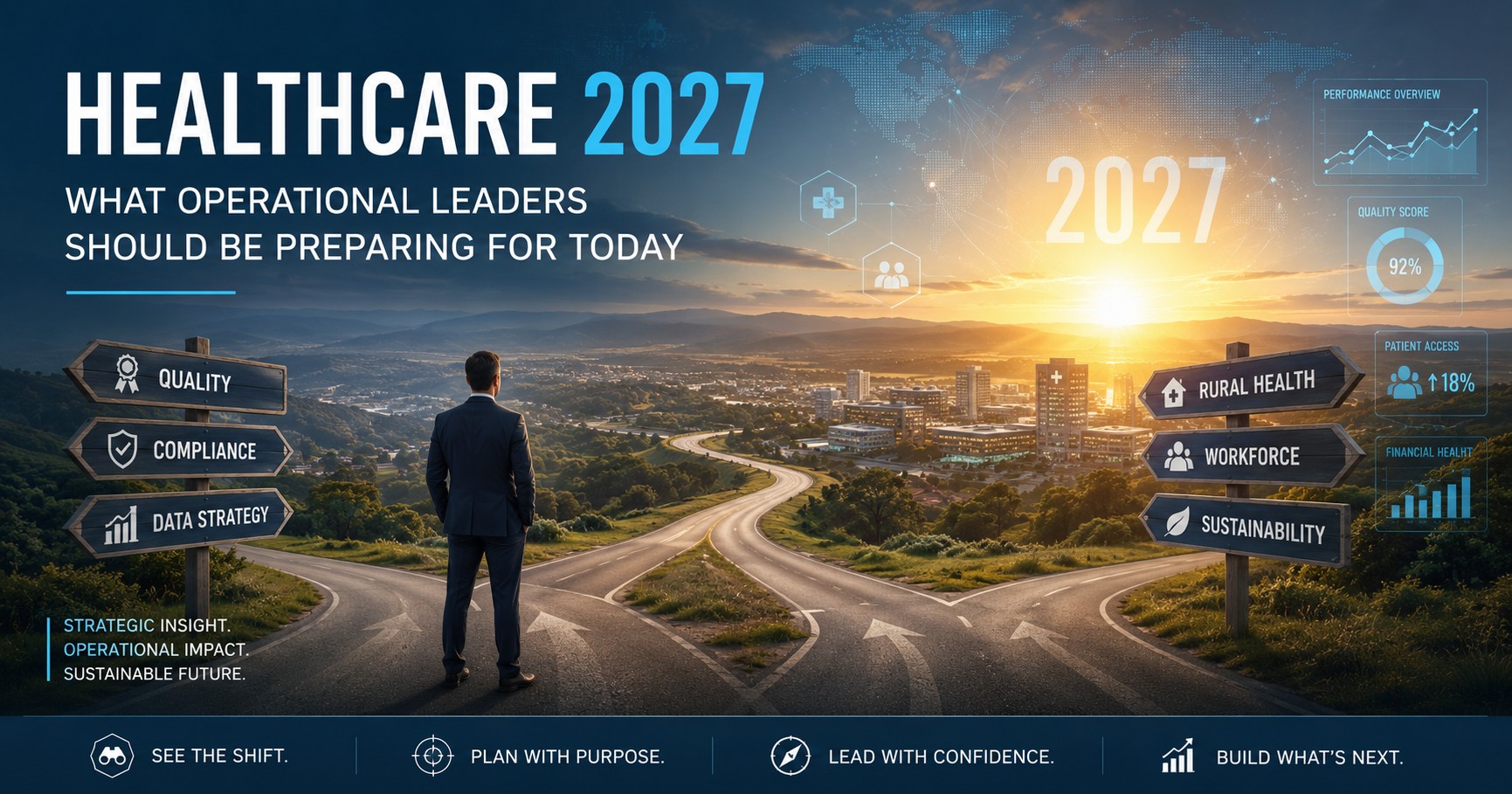
Healthcare leaders today are operating in an environment where quality reporting expectations continue to expand faster than the systems supporting them. Many organizations are still balancing competing priorities—staffing shortages, shifting payer requirements, and ongoing EHR optimization efforts—while also being asked to produce cleaner, more transparent, and increasingly automated data submissions. The challenge is no longer just achieving strong performance scores; it is ensuring that the underlying data is complete, consistent, and defensible across every reporting channel.
This tension is becoming more visible as quality programs evolve. Across Medicare, Medicaid, and commercial payer initiatives, there is a clear movement toward electronic submission, digital quality measures, interoperability, and patient-level data validation. As this shift accelerates, organizations are being evaluated not only on outcomes, but on the reliability of the data used to calculate those outcomes.
Historically, quality success has been defined by performance rates—preventive screenings, chronic disease management, and other benchmarked measures. While clinical performance remains essential, the future of reporting places equal (if not greater) emphasis on how those results are generated. By 2027, the differentiator for many organizations may not be who performs best clinically, but who can most accurately demonstrate that their data reflects true clinical activity.
A key driver of this change is the continued expansion of electronic clinical data systems (ECDS) and digital quality measures. As reporting becomes more automated and standards-based, reliance on structured EHR data increases, reducing tolerance for gaps, inconsistencies, or manual workarounds. At the same time, patient-level validation expectations are growing, requiring organizations to trace reported results back to documentation, coding specificity, and data capture workflows.
Emerging AI-supported validation tools are also beginning to influence the landscape. While still evolving, these technologies are increasingly capable of identifying anomalies, missing data elements, and inconsistencies before submission. This introduces a new layer of accountability, where organizations must be prepared not only to report data, but to explain and correct it in near real time.
As these pressures converge, data governance is becoming a strategic priority rather than a back-office function. Effective workflows across clinical documentation, coding accuracy, data extraction, and submission processes are now foundational to sustainable performance in value-based care models.
The takeaway is clear: as reporting becomes more automated and transparent, data integrity becomes the true measure of readiness.
For organizations preparing for the next phase of quality reporting, the question is not whether requirements will change, but whether current data infrastructure can withstand increasing validation and interoperability demands. A proactive review of reporting workflows, documentation practices, and data governance structures can help identify gaps before they become compliance risks.
Supporting this transition often requires a structured approach to assessment and improvement. This is where targeted audit, education, and consulting support can help organizations strengthen their foundation and align operational processes with emerging expectations. To explore how these capabilities can be applied within your organization, consider partnering with BCA, Inc. for expert-driven support in preparing for the next generation of quality reporting.
Book your consultation today with one of our experts.