For many healthcare organizations, telehealth has shifted from an emergency solution to a permanent part of patient care. At the same time, compliance expectations continue to evolve, payer scrutiny remains high, and organizations are under increasing pressure to do more with fewer resources. Amid competing priorities, it’s easy for seemingly minor documentation details to be overlooked—but those small gaps can create significant compliance risk during an audit.
One trend identified through recent audits is incomplete documentation of telehealth encounters. While providers are often selecting the appropriate CPT® code and modifiers 93 or 95 are being appended, the medical record frequently lacks the supporting details of the virtual service delivered. This pattern has been most common in behavioral health services, although it also appears in medical encounters.
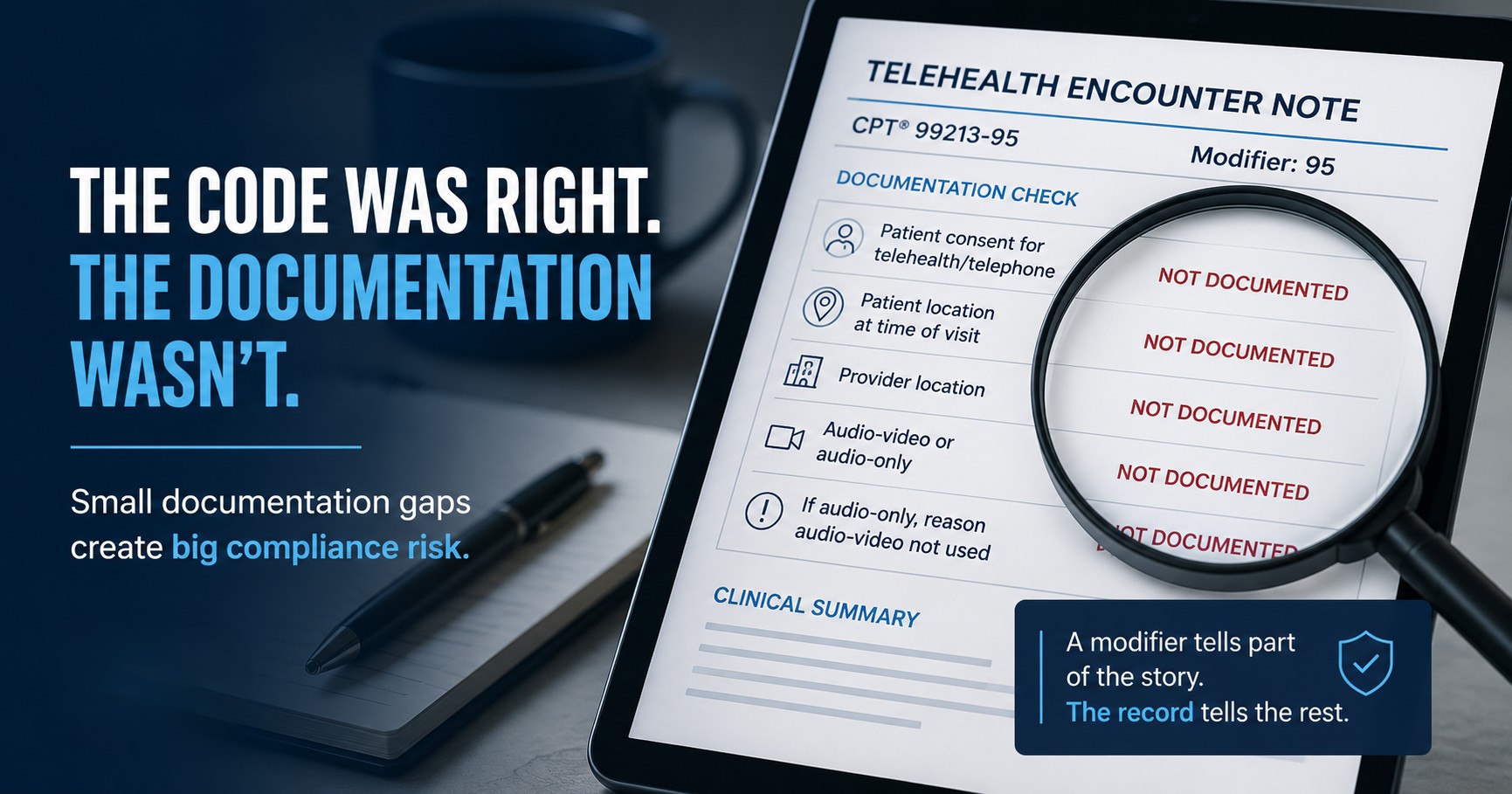
A modifier alone does not tell the full story of the visit. The medical record should clearly document key elements of the telehealth encounter, including:
- The patient’s consent to receive services via telehealth or telephone.
- The patient’s location at the time of the visit.
- The provider’s location.
- Whether the encounter was conducted using audio-video technology or audio-only communication.
- If the visit was audio-only, the reason audio-video technology was not used.
These elements help demonstrate that the documented service supports what was reported on the claim. They also provide valuable context during internal audits, payer reviews, and other compliance activities.
Because telehealth requirements can differ by payer, state regulations, and organizational policy, consistency is just as important as completeness. Organizations can often improve compliance by incorporating standardized telehealth prompts into their electronic health record templates or documentation workflows. Simple reminders can help providers capture required information without significantly increasing documentation time.
Periodic documentation reviews are equally important. Looking for trends across providers can identify opportunities for targeted education before documentation deficiencies become larger compliance concerns. Small improvements made today can strengthen documentation quality, improve consistency, and better prepare organizations for future audits.
Telehealth documentation is more than a billing requirement—it’s an essential part of accurately reflecting the care that was provided. Ensuring those foundational elements are consistently documented helps support compliance, reduces audit risk, and creates a more complete patient record.
If your organization hasn’t recently evaluated its telehealth documentation practices, now is an excellent time to do so. BCA partners with healthcare organizations through documentation audits, provider education, and compliance consulting to identify documentation trends, close compliance gaps, and build practical workflows that support accurate, self-defendable telehealth documentation.
Schedule a consultation with one of our experts.