
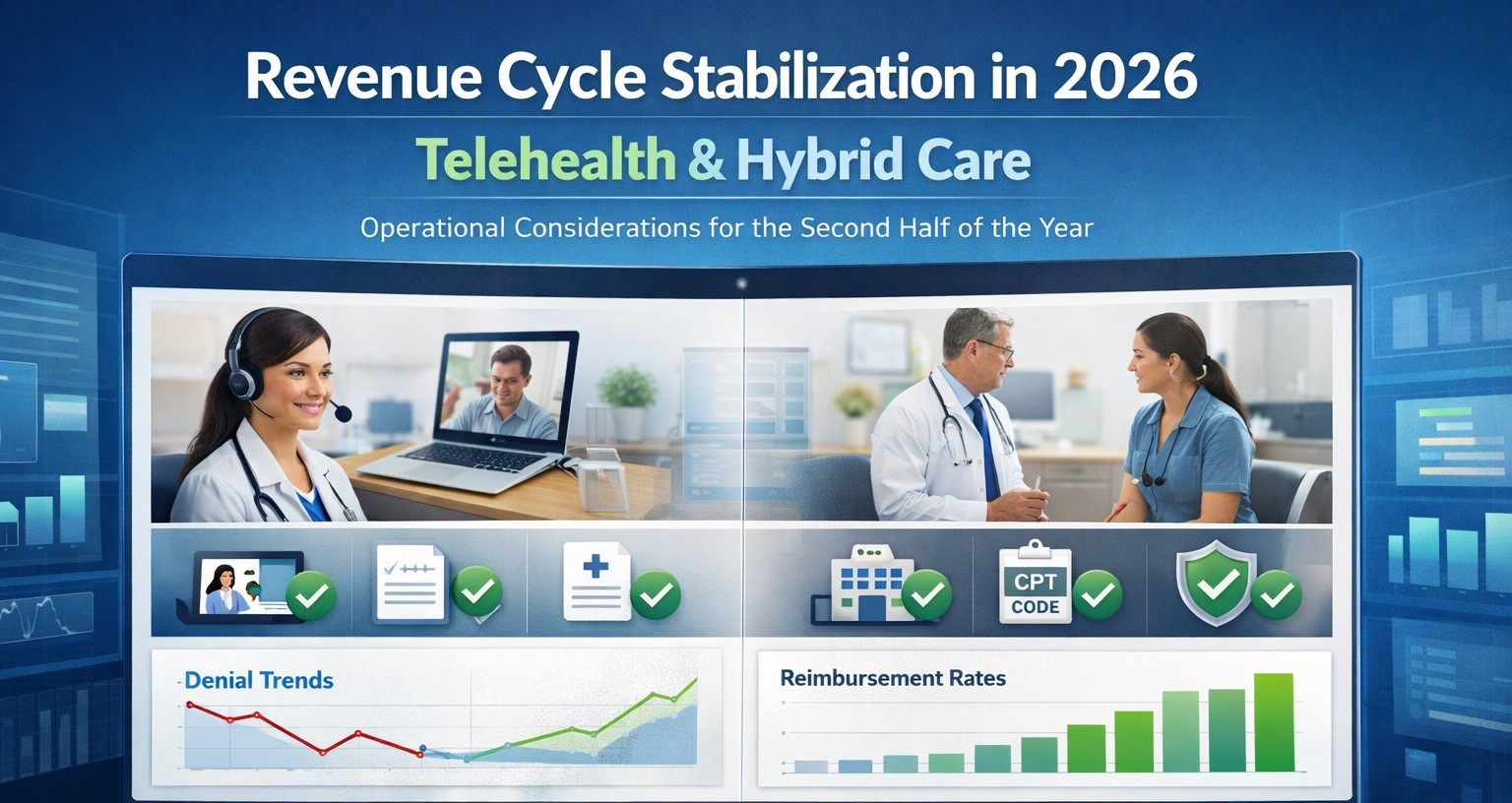
Many health centers and clinics have embraced telehealth as a permanent care delivery channel. But as virtual visits become routine, leaders are recognizing that simply offering telehealth is not enough. Inconsistent coding, outdated documentation practices, and evolving payer policies can quickly create compliance risk, denials, and revenue leakage.
As telehealth becomes embedded in daily operations, revenue cycle leaders are shifting from “keeping telehealth running” to ensuring that virtual and hybrid encounters are consistently compliant, accurately coded, and reliably reimbursed.
Telehealth is no longer experimental. Patients expect virtual access—particularly for behavioral health, chronic condition management, and follow-up care. Many organizations now use standardized visit types, scheduling templates, and platforms.
This stability presents an opportunity. Instead of reacting to individual denials or payer feedback, organizations can intentionally align telehealth workflows with revenue cycle requirements, ensuring virtual services are captured, coded, and billed correctly from the start.
Despite operational maturity, telehealth reimbursement rules continue to shift. Coverage policies, eligible services, place-of-service reporting, and modifier requirements remain payer-specific and subject to change.
Documentation expectations mirror in-person standards: clear medical necessity, relevant history, assessment, and plan of care. Reliance on outdated tip sheets or long-standing habits can quickly lead to underpayment, overpayment risk, or denials.
- Reassess Visit Type Mapping
Confirm telehealth and in-person visits are accurately linked to current CPT codes, modifiers, and place-of-service indicators. - Audit Hybrid Encounters
Review samples of virtual and hybrid visits to verify documentation supports the level of service and telehealth-specific requirements. - Standardize Scheduling Logic
Clearly define which visit types are appropriate for telehealth or in-person care, to reduce downstream billing corrections. - Provide Targeted Education
Deliver concise, recurring education for providers, coders, and billing staff on telehealth coding and documentation expectations. - Monitor Telehealth Denials and Trends
Track denial reasons tied to telehealth to identify training or workflow gaps early.
Telehealth success is no longer about technology—it is about revenue cycle integrity. Organizations that refine hybrid workflows now are better positioned to reduce denials, protect reimbursement, and minimize compliance risk.
At BCA, we partner with organizations through targeted audits, focused education, and practical consulting to evaluate telehealth and hybrid encounters, identify risk areas, and strengthen revenue cycle performance. If your clinic is ready to move from simply offering telehealth to optimizing it financially and compliantly, we’re here to help.
Your team already delivers excellent care—BCA helps ensure documentation, coding, and billing accurately reflect it. Through targeted audits, focused education, and practical consulting, we support providers and staff so they can focus on patients while the revenue cycle stays strong and compliant.
Connect with an expert today.