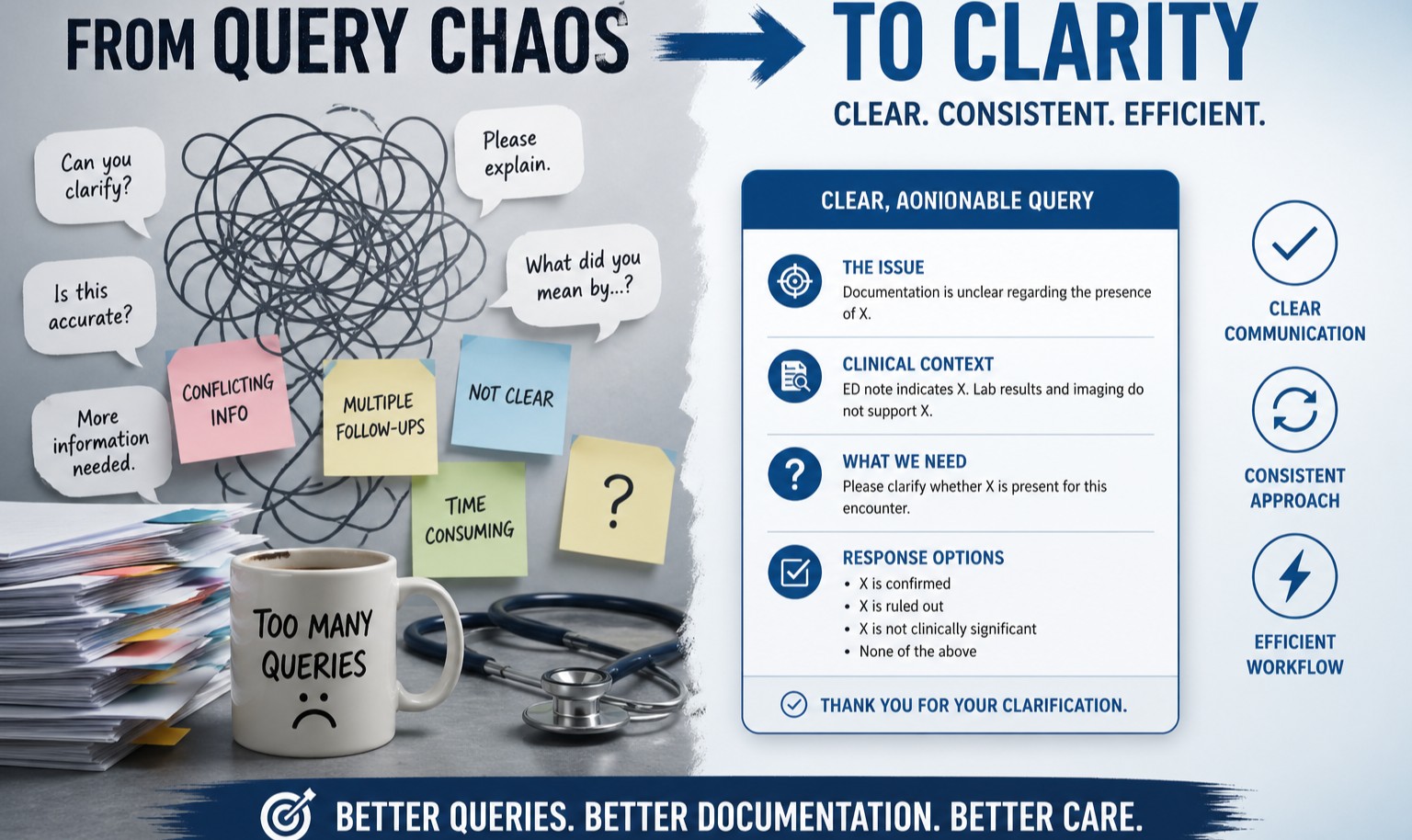
Providers often express frustration when queries from coders are unclear, inconsistent, or overly frequent. Query practices are not just administrative tasks—they directly influence documentation integrity, compliance risk, workflow efficiency, and provider engagement. Addressing common pitfalls can reduce frustration and strengthen the overall documentation process.
Vague Queries
One of the most common frustrations is receiving a query that leaves providers asking, “What do you really want from me?” When a query lacks specificity, providers must spend additional time interpreting the request rather than addressing the documentation issue itself.
While coders cannot lead clinical decision-making, queries can and should be structured to provide clear, actionable information. A well-crafted query outlines exactly what documentation is needed, why it is needed, and where the gap exists in the record. Including relevant clinical context helps providers quickly understand the issue. Clear communication reduces unnecessary back-and-forth and supports timely, accurate responses.
Uninformed Queries
Providers also notice when a query appears to come from limited research. Queries that overlook existing documentation, lab results, imaging, or prior notes can undermine trust in the process.
Before issuing a query, coders should demonstrate that they have reviewed the record thoroughly. If conflicting information exists, the coder should summarize those findings and request clarification. For example: “My review shows conflicting documentation regarding X. Can you clarify?”
This approach reflects due diligence, reinforces collaboration, and signals that the query is based on careful analysis—not assumption.
Inconsistent Queries
When different coders approach similar situations in conflicting ways, it creates confusion. Providers may receive a query for a diagnosis in one encounter but not in a nearly identical case the following week. This inconsistency makes it difficult for providers to understand expectations and adjust documentation habits.
Establishing standardized query policies, templates, and internal education ensures that similar scenarios are handled consistently. Standardization promotes fairness, improves predictability, and strengthens provider confidence in the process.
Volume of Queries
High query volume is another significant source of frustration. Excessive queries often point to misaligned internal policies, overly restrictive interpretations, or outdated coding practices.
Regular review of organizational policies against current coding guidelines can help identify unnecessary query triggers. Reducing avoidable queries allows coders to focus on meaningful documentation gaps and enables providers to respond more efficiently.
Inefficient Queries
Queries should aim to be “one and done.” Multiple follow-ups increase administrative burden and delay resolution. Using the BLUF method—Bottom Line Up Front—coders clearly state the issue, present compliant response options (including “none of the above”), and provide concise supporting details. This structure promotes efficient review and reduces repeat communication.
Clear, consistent, and efficient queries transform documentation clarification from a source of frustration into a structured compliance tool that supports accurate reporting and quality patient care.
For organizations seeking to evaluate and strengthen their query processes, an objective review can provide valuable insight. Through revenue cycle consulting services, BCA works with coding teams and providers to standardize practices, reduce unnecessary query volume, and improve communication workflows. When query practices are intentional and aligned, documentation improves—and provider engagement follows.
Connect with an expert today.