Many healthcare organizations are working harder than ever to improve quality performance, manage limited resources, and prepare for increasingly sophisticated payer and Medicaid reporting requirements. Yet one challenge continues to surface across pediatric practices and health systems: chronic conditions that are actively managed but inconsistently documented.
As reimbursement models, care coordination programs, and population health initiatives become more data-driven, organizations cannot afford to lose visibility into the conditions affecting their pediatric populations. While diagnosis revalidation discussions often focus on adult patients with multiple chronic diseases, children also require regular diagnosis review to ensure their health needs are accurately reflected in the medical record.
Several pediatric conditions are recognized within risk adjustment and care management methodologies such as the Chronic Illness and Disability Payment System (CDPS). Common examples include asthma, epilepsy, cerebral palsy, ADHD, depression, autism spectrum disorder, Type 1 diabetes, sickle cell disease, Down syndrome, celiac disease, hemophilia, and various forms of anemia.
These conditions frequently drive specialist referrals, care coordination efforts, and eligibility for Medicaid managed care programs and other support services. Accurate documentation helps organizations demonstrate the complexity of care being delivered while supporting reporting and reimbursement requirements.
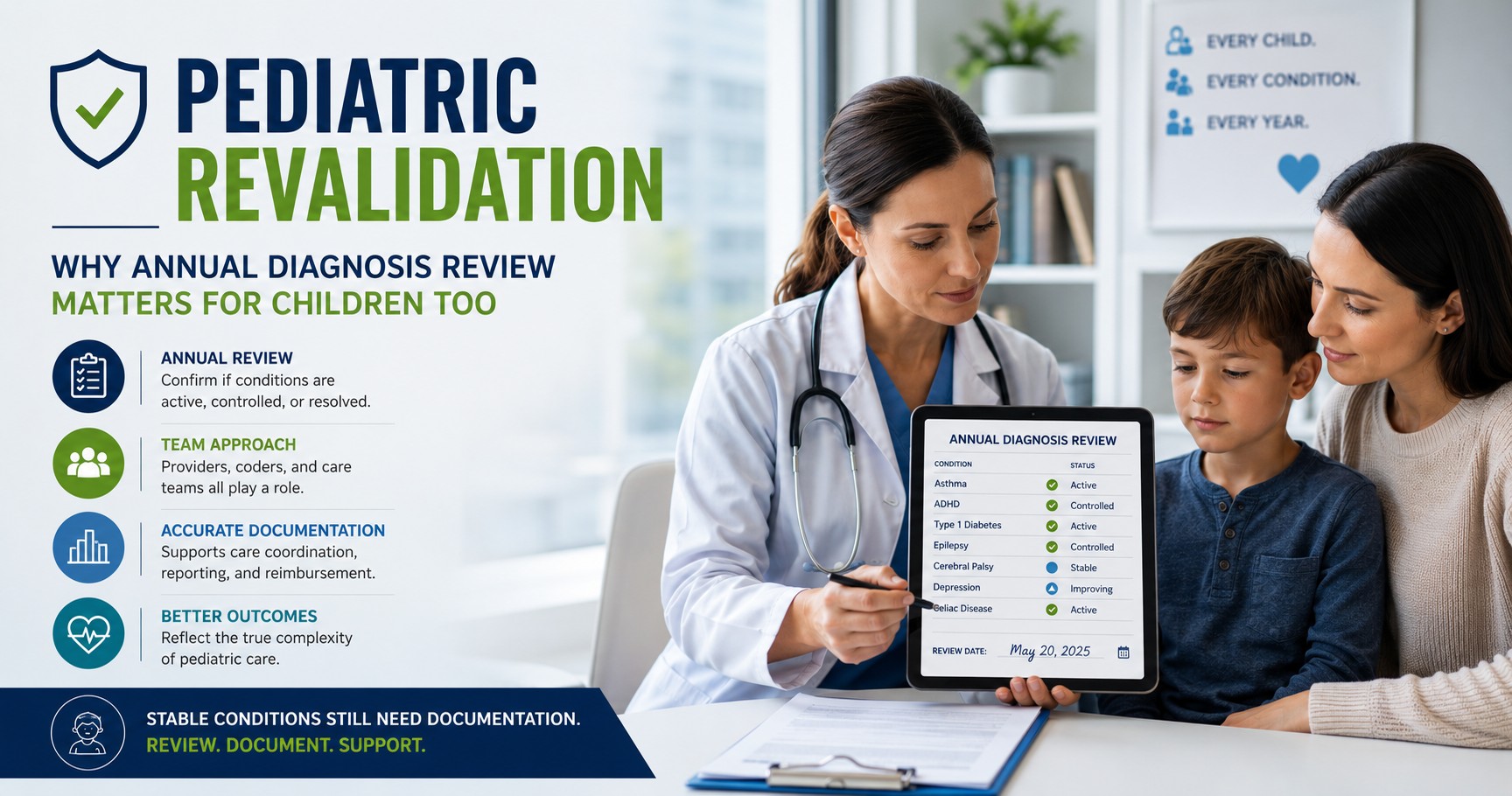
One of the most important principles of pediatric documentation is that chronic conditions must be revalidated regularly. A condition may be stable, well-controlled, or unchanged, but if it continues to influence treatment decisions, medication management, monitoring, or care planning, it should be documented accordingly. Annual review should clearly identify whether a condition is active, controlled, improving, worsening, or resolved.
Organizations should also be alert for diagnoses that gradually disappear from documentation despite ongoing treatment. Children may continue taking asthma medications or receiving ADHD management, yet the diagnosis itself may no longer appear in provider notes. Likewise, congenital, genetic, and behavioral health conditions often remain clinically relevant even when symptoms are stable.
Successful revalidation efforts involve the entire care team. Clinical staff can identify ongoing symptoms and medication use during intake. Coders can identify treatments that lack supporting diagnoses. Care coordinators can help ensure children with complex medical needs have active conditions appropriately documented to support access to services and programs.
For pediatric organizations, annual diagnosis review is more than a documentation exercise—it is a critical component of accurate reporting, effective care coordination, and financial sustainability. A child with stable asthma or ADHD still represents ongoing clinical work, and that work should be reflected in the record.
Organizations looking to strengthen pediatric documentation, improve diagnosis capture, and support reporting accuracy can benefit from a proactive approach. Through provider education, documentation audits, coding reviews, and consulting services, BCA helps healthcare organizations identify opportunities, improve documentation practices, and build sustainable processes that support both quality care and organizational performance.
Book your consultation today with one of our experts.