Healthcare organizations are under increasing pressure to deliver integrated, patient-centered care while simultaneously navigating workforce shortages, provider burnout, rising behavioral health demand, and heightened payer scrutiny. For leaders expanding Primary Care Behavioral Health (PCBH) programs, one challenge continues to surface repeatedly: documentation expectations often have not evolved alongside the care model itself.
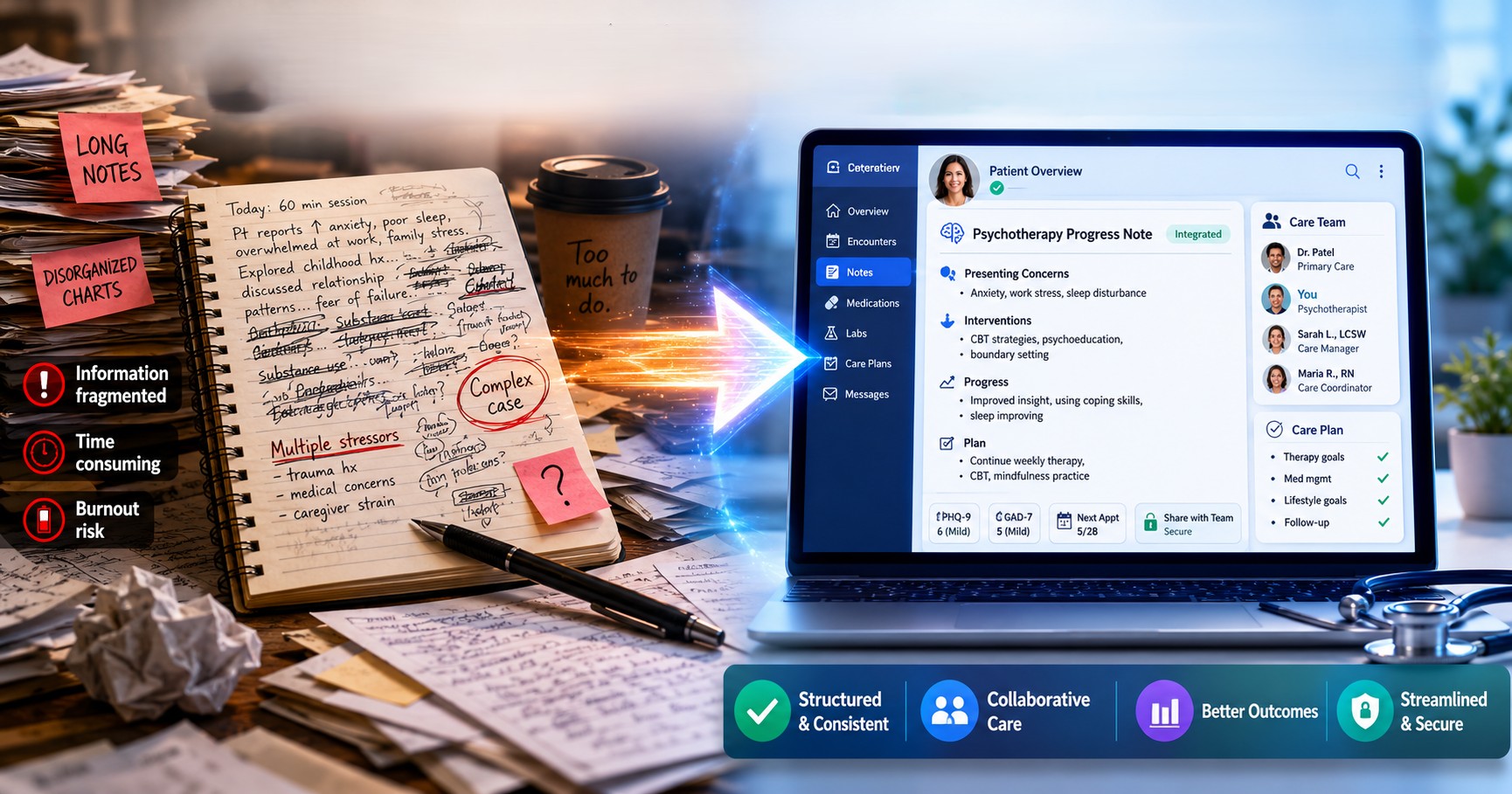
Many organizations still see behavioral health documentation rooted in traditional psychotherapy structures — lengthy narrative notes, extensive treatment plans, and symptom-heavy documentation that may not align with the fast-paced, team-based environment of primary care. The result can be inconsistent workflows, provider frustration, communication gaps, and documentation that does not clearly support coordinated care or operational goals.
In the PCBH model, documentation serves a different purpose. Notes should be concise, collaborative, functional, and immediately useful to the primary care team. The focus is not simply documenting symptoms — it is documenting how behavioral health concerns affect overall functioning, health outcomes, and patient care.
Initial PCBH visits often center on a contextual interview designed to quickly identify concerns, assess functional impact, and establish an actionable plan. Documentation should capture the patient’s presenting concerns alongside relevant life or health context. For example, a patient experiencing increased anxiety after job loss may also report disrupted sleep, strained relationships, or difficulty adhering to medical treatment recommendations.
Functional impact should remain central throughout the note. Rather than extensive narrative detail, documentation should emphasize how symptoms influence work performance, daily activities, treatment adherence, energy, motivation, or interpersonal functioning.
Because PCBH is highly action-oriented, each encounter should also include a behavioral prescription or visit-based plan. This may involve introducing coping strategies, behavioral activation techniques, relaxation exercises, or coordination with the primary care provider regarding medications or medical concerns. Mental status observations should remain concise but clinically meaningful.
Follow-up visits should continue emphasizing functional progress and patient engagement. When interventions are documented, pairing the intervention label with a brief description of how it was applied strengthens clarity and supports the integrated care model. Notes should also capture the patient’s response, participation, and planned next steps outside the visit.
Ultimately, successful PCBH documentation supports continuity, strengthens communication across the care team, and reinforces the goals of integrated care delivery.
As organizations continue expanding behavioral health integration efforts, many are recognizing the need for practical documentation guidance, workflow evaluation, and provider education tailored specifically to the PCBH environment. Through focused audits, education, and consulting services, BCA, Inc. helps organizations identify documentation gaps, improve compliance and operational consistency, and support providers with realistic, workflow-based strategies that align with today’s integrated care landscape.
Book your consultation today with one of our experts.