Healthcare organizations today are facing increasing pressure to do more with less. Therapy departments are balancing rising patient volumes, staffing shortages, productivity expectations, payer scrutiny, and growing documentation demands—all while trying to protect time for patient care. At the same time, auditors and payers continue to place greater emphasis on medical necessity, treatment justification, and documentation integrity for rehabilitation services.
For many leaders, the challenge is not whether quality care is being delivered. The concern is whether the documentation consistently tells that story clearly enough to withstand payer review, support reimbursement, and reduce compliance risk.
Documentation compliance in physical therapy (PT) and occupational therapy (OT) services often becomes a hidden vulnerability because issues are not always obvious until denials, audit findings, or reimbursement concerns begin to surface. Even clinically appropriate care can become difficult to defend if the medical record does not fully support the services billed.
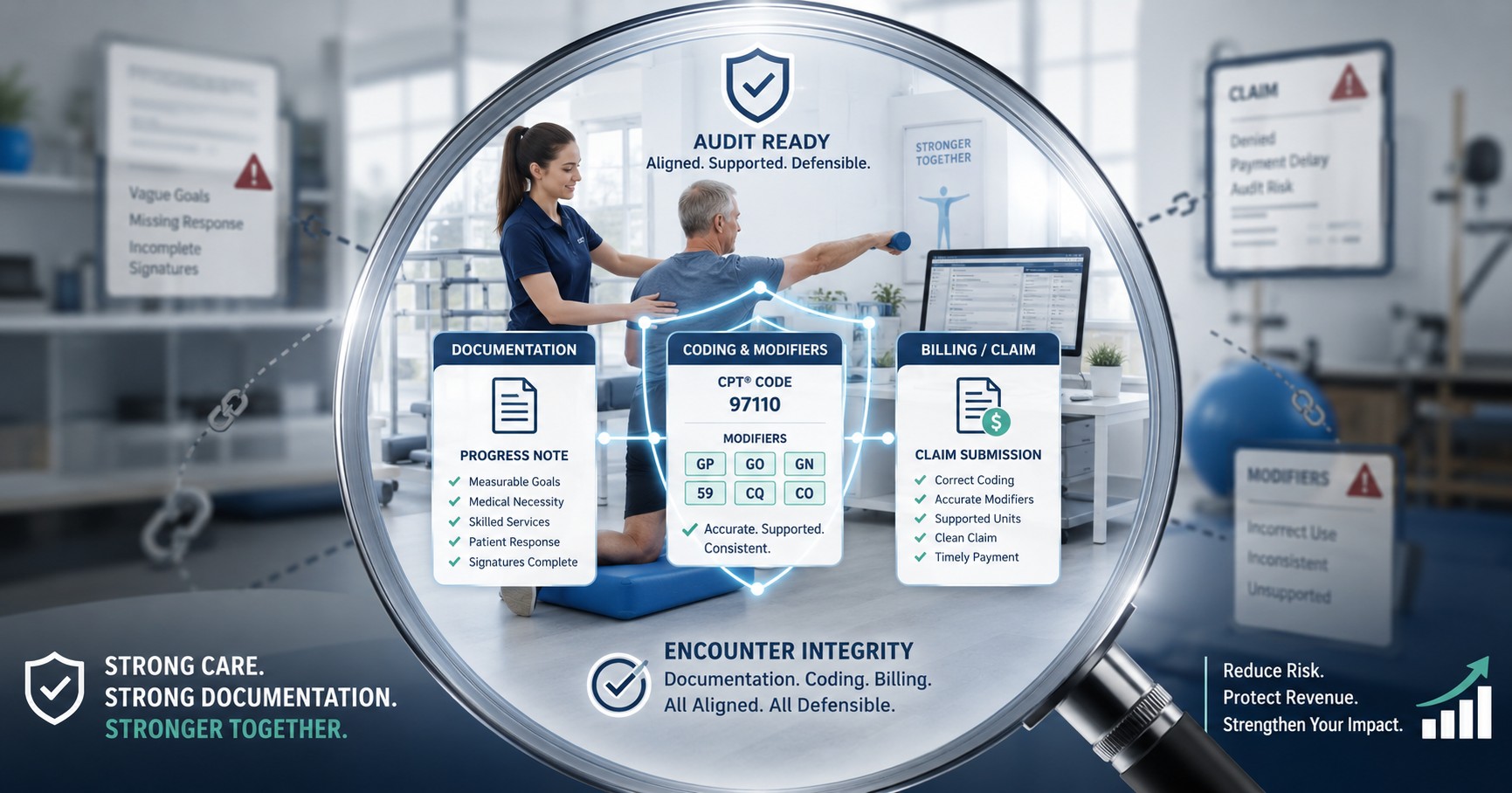
In therapy services, documentation must do more than summarize exercises or modalities performed during a visit. The record must clearly establish why skilled therapy was medically necessary, what interventions were provided, how the patient responded, and why continued treatment remains appropriate.
From a regulatory and payer perspective, compliant therapy documentation should consistently demonstrate:
- A defined plan of care with measurable goals
- Clear support for medical necessity
- Evidence of skilled therapy services
- Progress notes that reflect patient response and improvement
- Appropriate certification and recertification timelines
However, audits frequently reveal recurring risk areas such as vague or repetitive daily notes, goals that are not measurable, progress reports that fail to justify continued therapy, missing signatures or certifications, and documentation that does not fully support billed time or services.
These issues are rarely intentional. More often, they reflect the realities of busy clinicians navigating administrative requirements while prioritizing patient care.
The impact extends beyond compliance alone. Incomplete or inconsistent documentation can contribute to denials, delayed reimbursement, repayment risk, and challenges demonstrating the value of skilled therapy services. Strong documentation also supports continuity of care and helps create a more defensible medical record overall.
That is why proactive review and education are becoming increasingly important for rehab departments looking to reduce risk before external scrutiny occurs.
At BCA, Inc., we help organizations evaluate therapy documentation and compliance processes through independent audits, targeted education, and operational consulting services. Our reviews focus on areas such as plan of care requirements, medical necessity support, progress note quality, coding and billing alignment, and overall encounter integrity.
Many organizations choose a RapidCheck or RapidCoach audit as a practical first step—a streamlined review designed to provide actionable insight into real-world compliance risk without requiring a large-scale engagement.Schedule a consultation with one of our experts.