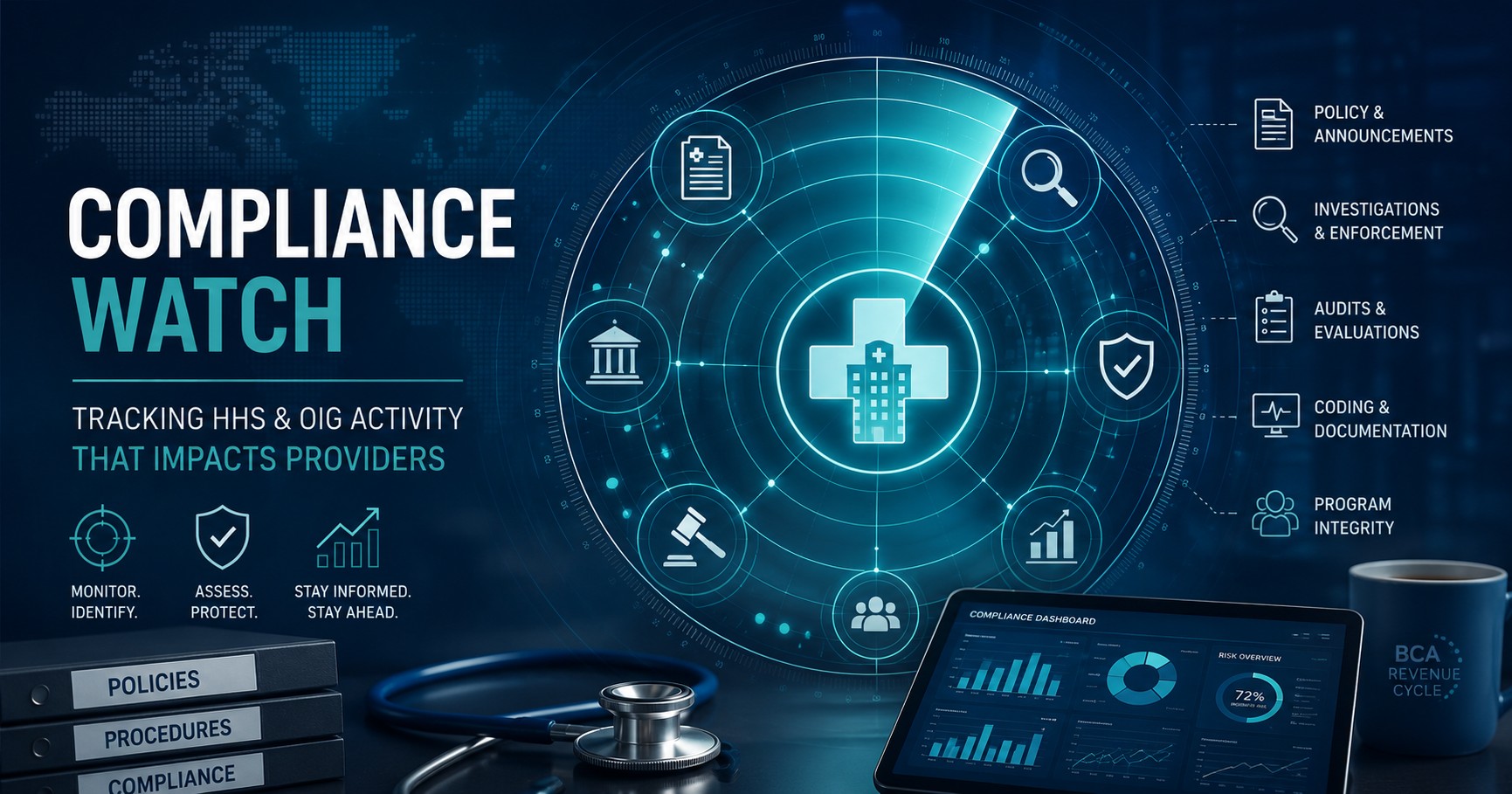
Across physician practices and healthcare organizations, leaders are operating in an increasingly difficult balance: maintain operational efficiency while meeting rising expectations for coding accuracy, documentation completeness, and audit readiness. With payer scrutiny intensifying and reimbursement tied more tightly to documentation integrity, even small inconsistencies can now translate into denials, repayment risk, or expanded audit exposure. Against this backdrop, recent Office of Inspector General (OIG) recommendations to CMS offer a clear signal—program integrity expectations are tightening, and the tolerance for preventable error continues to narrow.
The OIG has repeatedly emphasized that CMS must strengthen its ability to prevent improper payments before they occur. Across multiple reviews, auditors continue to identify claims paid without sufficient documentation support or with coding that does not fully align with the underlying clinical record. Importantly, these findings are not limited to fraud; they often reflect administrative gaps, inconsistent documentation practices, or breakdowns in coding workflow that still result in noncompliant claims.
A central concern highlighted in recent recommendations is the disconnect between clinical documentation and billed services. In several cases, documentation did not fully substantiate the service level, procedure, or code reported. As a result, OIG has encouraged CMS to expand pre-payment edits, improve system logic, and strengthen provider education efforts to reduce repeat errors. The focus is shifting away from post-payment recovery and toward preventing inaccuracies at the point of claim submission.
In addition, OIG has called for more robust system-level controls to detect abnormal billing patterns earlier in the process. These include risks such as inappropriate modifier use, duplicate services, and timing inconsistencies. The broader message is clear: payment integrity is becoming increasingly data-driven, with greater reliance on automated detection and targeted review rather than retrospective audit alone.
For providers and compliance teams, these developments reinforce a critical reality—documentation is no longer just a clinical narrative. It is a compliance and reimbursement artifact that must clearly and consistently support medical necessity, coding specificity, and service accuracy. As oversight becomes more sophisticated, incomplete or inconsistent documentation can significantly elevate audit risk.
Organizations should also anticipate continued focus on coding behavior patterns and reinforce internal auditing and education efforts accordingly. Ongoing training around evolving CMS guidance, E/M coding, modifier usage, and documentation standards will remain essential to reducing preventable risk.
Ultimately, the direction from OIG is unmistakable: CMS is expected to strengthen its safeguards, but providers remain the frontline of compliance. Organizations that invest in stronger documentation practices, targeted coder and provider education, and proactive audit readiness will be better positioned to navigate this evolving landscape.
For organizations looking to move from awareness to action, partnering with an experienced compliance resource can help translate these findings into measurable improvement. Through targeted audit support, education programs, and consulting services, BCA, Inc. helps healthcare organizations identify risk areas, strengthen documentation integrity, and build sustainable compliance processes that align with today’s enforcement environment.
Connect with an expert today.