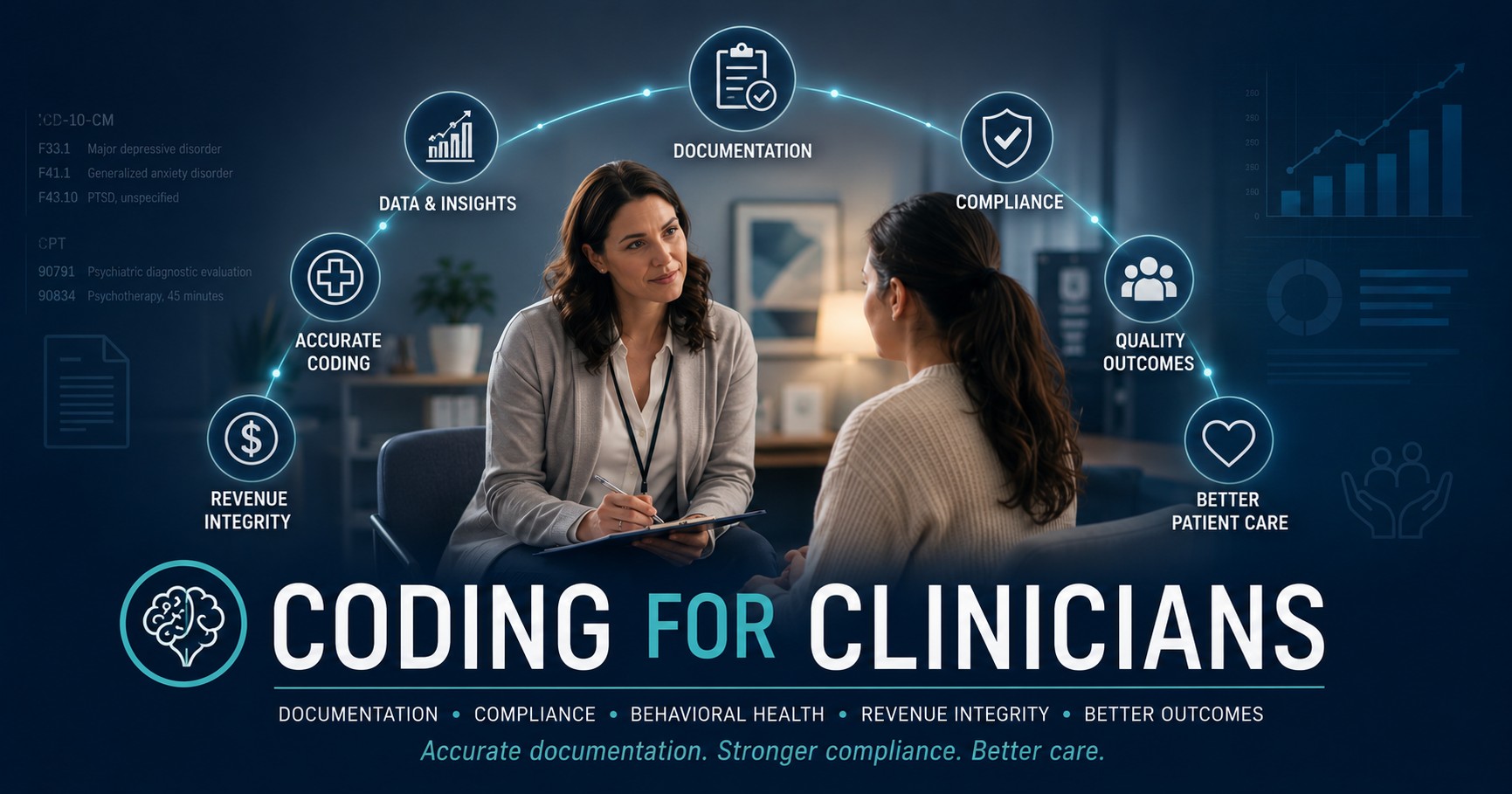
In today’s healthcare environment, many organizations are finding that documentation challenges are no longer isolated operational issues—they are directly tied to financial performance, compliance risk, and audit vulnerability. Denials tied to documentation gaps are increasing, payer scrutiny continues to intensify, and leaders are being asked to do more with fewer resources while still ensuring accuracy across every encounter. At the same time, providers are expected to document efficiently within increasingly complex EHR systems, often without consistent feedback on how their documentation is interpreted downstream. This gap between clinical intent and coded reality is where risk and revenue leakage quietly accumulate.
Building better documentation habits requires moving beyond reactive fixes and toward intentional, sustainable practice change. One of the most persistent barriers is note cloning. While carrying forward prior information may improve efficiency, it frequently introduces outdated or clinically inaccurate details into the current encounter. Over time, this can blur the true clinical picture and create downstream coding, compliance, and audit challenges. Addressing this issue requires both awareness at the provider level and reinforcement through organizational expectations that prioritize current, encounter-specific documentation.
Closely related is the need for improved clinical specificity. Documentation that remains vague or generalized limits the ability to accurately represent patient complexity. Clear articulation of diagnoses, severity, contributing factors, and clinical status supports stronger communication across care teams while also improving code accuracy and risk capture. Importantly, this improvement is not about increasing documentation volume, but about increasing clarity and intentionality within existing workflows.
Efficiency pressures also play a significant role in shaping documentation behavior. Many providers rely heavily on templated or checkbox-driven workflows to manage time constraints. While structured tools are essential, overreliance can flatten clinical nuance and reduce meaningful differentiation between encounters. The goal is not to eliminate efficiency tools, but to ensure they are used in a way that still reflects individualized patient care and clinical reasoning.
Another key driver of improvement is real-time coding awareness. When providers have visibility into how documentation translates into coding outcomes, they are better positioned to capture relevant clinical detail at the point of care. This does not require providers to function as coders, but rather to understand the downstream impact of their documentation choices.
Equally important is establishing consistent feedback loops between coding and clinical teams. When documentation gaps are identified and communicated in a timely, constructive manner, providers can adjust patterns before those habits become embedded in routine practice. This creates a cycle of continuous improvement rather than retrospective correction after claims are submitted or audited.
Ultimately, improving documentation quality is not about adding burden—it is about refining habits that already exist. Small, consistent changes in documentation behavior can significantly improve accuracy, compliance, and financial integrity over time.
For organizations looking to operationalize these improvements, targeted support can make the difference between awareness and sustained change. BCA’s audit, education, and consulting services are designed to bridge the gap between clinical documentation and coding performance, helping organizations strengthen provider habits, reduce risk, and build long-term documentation integrity.
Connect with an expert today.