In FQHC and RHC dental programs, patients often present with complex oral health needs, multiple untreated conditions, and varying levels of access to care. While dentists and hygienists routinely manage caries and periodontal disease, risk information is often captured inconsistently across providers, visits, and patient encounters. Without an integrated approach to dental risk documentation, clinics may miss opportunities for preventive care, fail to demonstrate continuity, and struggle to show measurable improvement in population health.
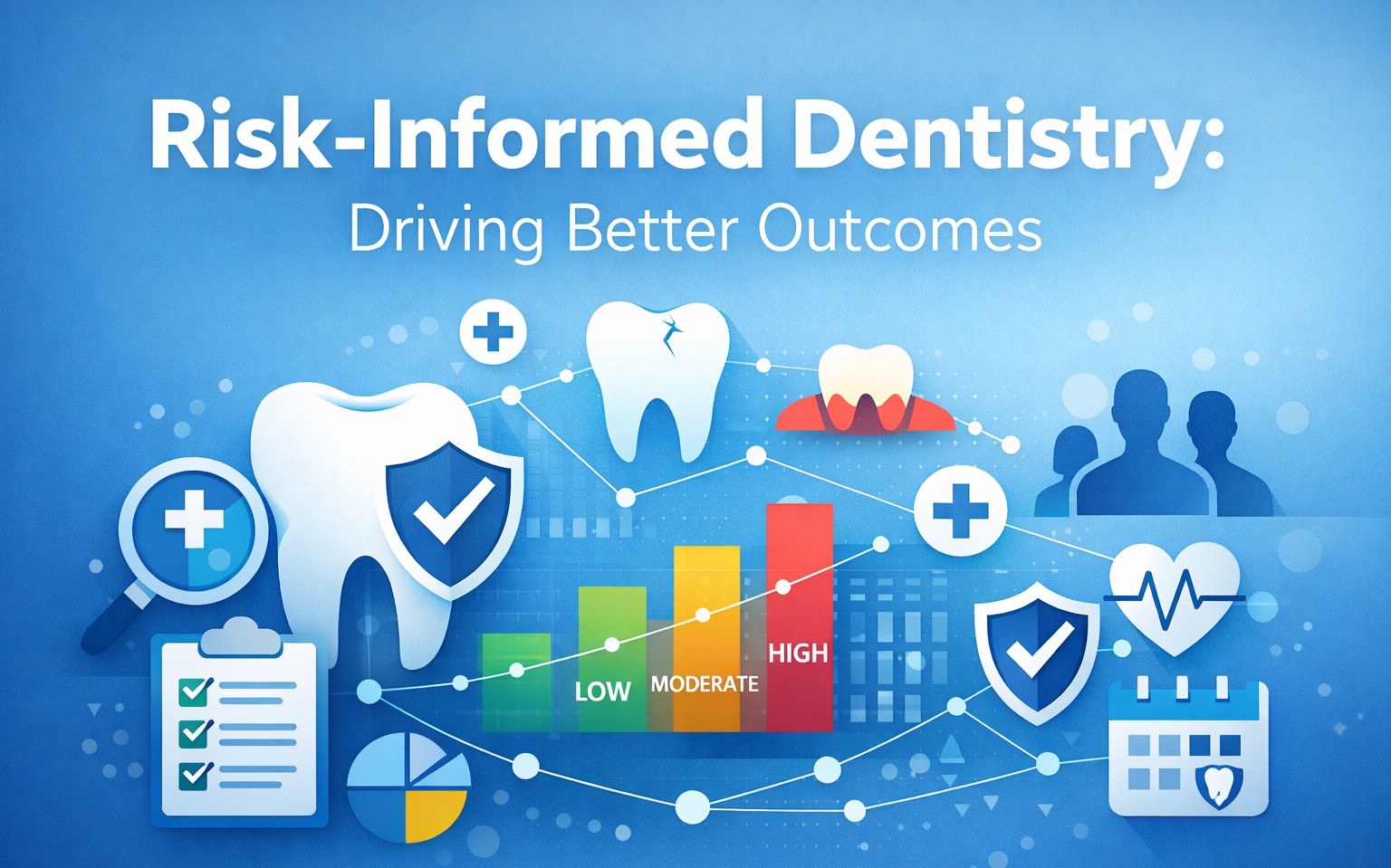
Integrating dental risk doesn’t mean bringing in medical or behavioral health data—it means creating a unified, consistent approach to assessing, documenting, and acting on risk across your entire dental program. High-risk patients, such as those with recurrent caries, progressing periodontal disease, or complex restorative needs, benefit when every provider is working from the same risk framework. By standardizing how risk is evaluated and recorded, dental teams can ensure that preventive strategies, treatment plans, and follow-up schedules reflect the patient’s current status rather than a snapshot from a previous visit.
Key strategies include:
- Consistent risk scoring: Document caries and periodontal risk in the EHR using standardized fields so all providers see and act on the same information.
- Routine reassessment: High-risk patients should be reassessed at each appropriate visit to capture changes in disease activity or response to preventive measures.
- Team-wide communication: Hygienists, dentists, and care coordinators should share risk updates to inform treatment sequencing, recall intervals, and patient education.
- Data-informed decision-making: Aggregate risk data can guide program-level priorities, such as targeting high-risk cohorts for preventive initiatives or outreach.
Accurate, integrated dental risk documentation also strengthens compliance and quality reporting. DQA measures, CDT coding updates, and internal performance metrics all rely on current, comprehensive documentation of risk and disease status. Clinics that make dental risk visible across the program are better positioned to show measurable outcomes, improve preventive care, and support long-term oral health management for their patients.
Integrating dental risk across a program requires clear workflows, consistent documentation practices, and ongoing team engagement. BCA works with FQHC and RHC dental programs through audits, education, and practical consulting to help teams standardize risk capture, strengthen documentation, and ensure every patient encounter reflects the most accurate, actionable view of oral health risk.
Book your consultation today with one of our experts.