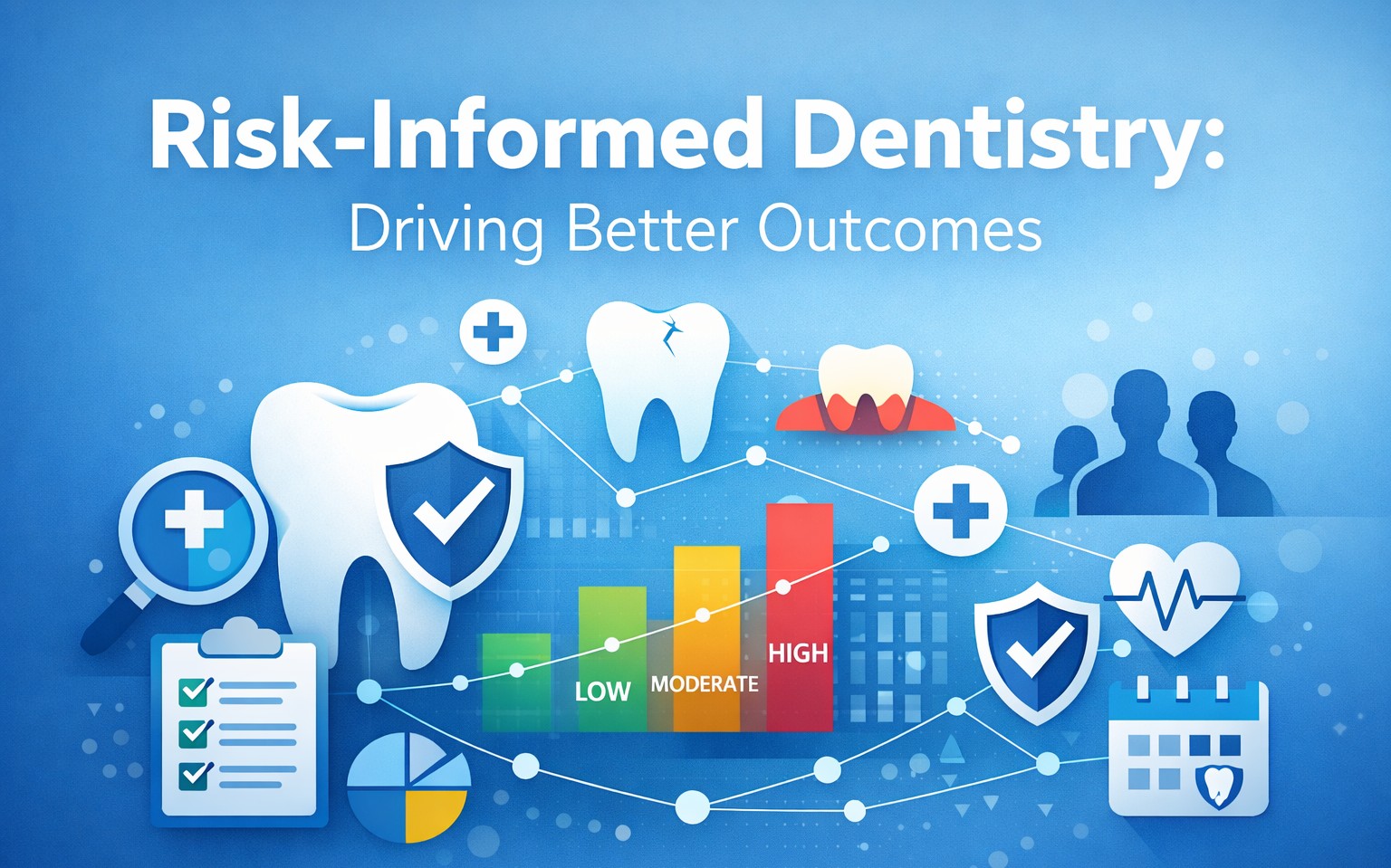
Dental programs in FQHCs and RHCs are facing growing pressure to demonstrate value, not just volume. Clinics are expected to improve preventive care, manage high-risk populations, and reduce avoidable utilization—often with limited staffing and constrained reimbursement. While many dental teams sense that payment models are evolving, the connection between day-to-day clinical documentation and long-term financial sustainability can feel unclear.
In this environment, dental risk documentation plays a critical role. Without consistent documentation of caries risk, periodontal status, and disease progression, dental programs risk underrepresenting the complexity of the populations they serve. This can weaken quality reporting, limit justification for preventive services, and leave clinics unprepared for emerging value-based dental arrangements. Risk is no longer solely a clinical concept; it is increasingly tied to how care is measured and supported.
Although dentistry does not use hierarchical condition categories like medical risk adjustment, value-based dental models rely heavily on documented risk to define expected services and outcomes. Capitated and bundled payment structures often account for patient complexity, including caries activity, periodontal disease severity, and the presence of contributing factors. Programs that effectively document and manage risk are better positioned to demonstrate appropriate preventive intensity and improved outcomes.
Evidence from Medicaid dental initiatives and caries management programs shows that risk-based care reduces disease progression, lowers restorative burden, and improves preventive utilization. However, these outcomes can only be demonstrated when risk is clearly documented over time. Inconsistent or incomplete risk documentation makes it difficult to show improvement, even when clinical care is effective.
For FQHCs and RHCs, accurate risk documentation supports more than reimbursement. It strengthens compliance, improves audit readiness, and aligns dental care with quality measures such as those developed by the Dental Quality Alliance (DQA). Clear documentation of risk and disease status also supports internal planning by helping clinics identify high-risk patients and allocate resources more effectively.
Understanding the relationship between risk and value-based payment is the first step. Acting on it requires intentional workflows, consistent documentation practices, and team-wide alignment. BCA partners with safety-net dental programs through audits, targeted education, and strategic consulting to help teams strengthen risk capture, align documentation with evolving payment models, and position their programs for long-term sustainability—without losing focus on patient care.
Connect with an expert today.