For many safety-net clinics and community health centers, January 2026 brings familiar challenges: tighter budgets, ongoing staffing shortages, and pressure to maximize revenue while staying compliant. Behavioral health services, in particular, often carry high risk for coding errors—errors that can affect reimbursement, risk adjustment, and even audit outcomes. In an environment where every claim counts, ensuring clinical accuracy in behavioral health coding is more important than ever.
Behavioral health coding requires a careful balance between clinical understanding and strict adherence to ICD-10-CM guidelines. Unlike many medical conditions, behavioral health disorders often evolve over time, are influenced by social determinants, and rely heavily on provider documentation to support diagnostic specificity.
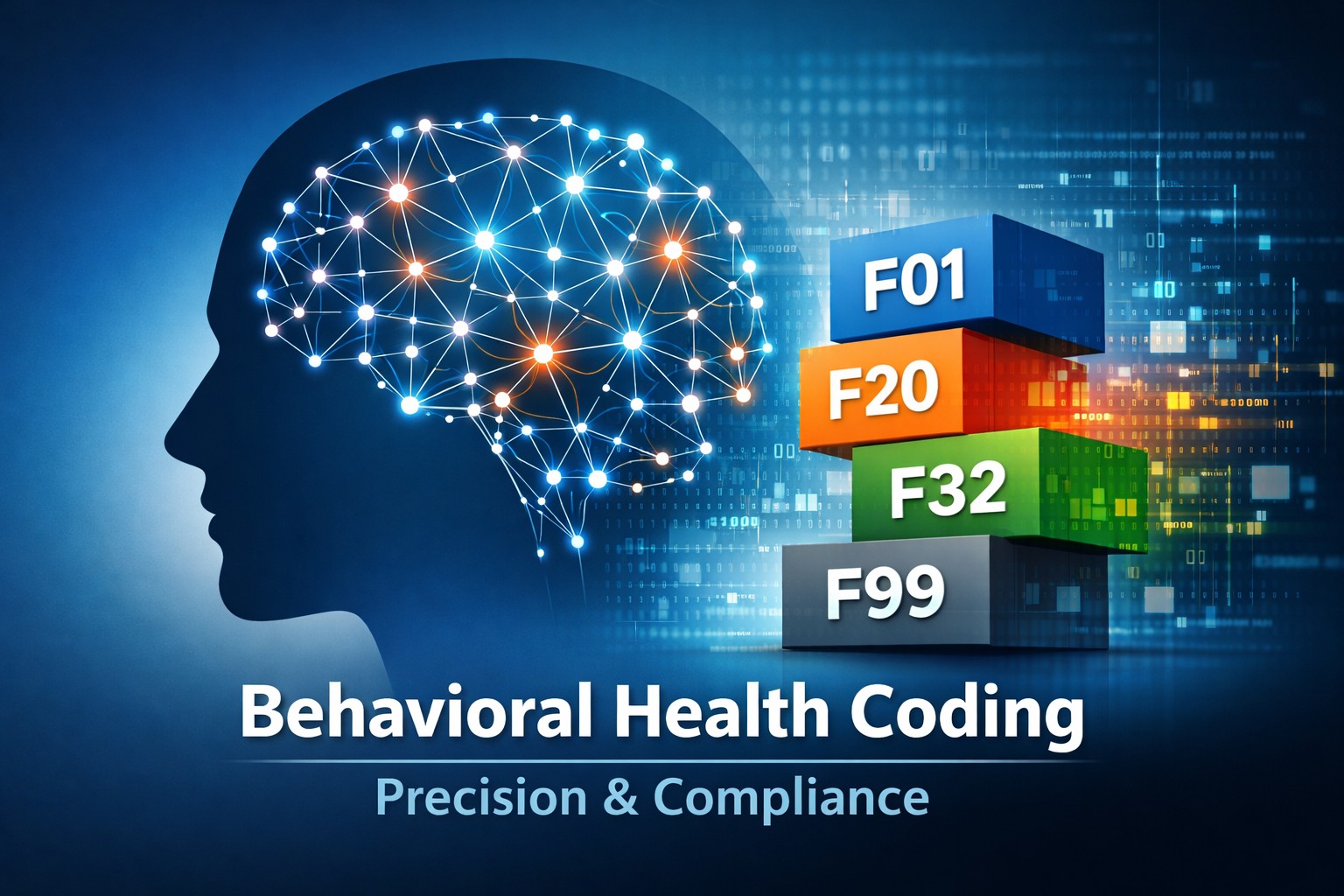
ICD-10-CM organizes mental, behavioral, and neurodevelopmental disorders primarily in Chapter 5 (F01–F99). Within this chapter, coders must pay close attention to distinctions such as episodic versus recurrent conditions, remission status, and severity. For example, major depressive disorder requires documentation that clearly supports whether the condition is single episode or recurrent, and whether it is mild, moderate, or severe—with or without psychotic features. Without this level of detail, coders may be forced to default to unspecified codes, which can impact data quality, reimbursement, and risk adjustment.
Another common challenge in behavioral health coding is distinguishing symptoms from diagnoses. Anxiety, insomnia, or mood changes may be documented without a clearly stated disorder. Coders must ensure that diagnostic codes are supported by provider assessment rather than inferred from symptoms alone. Comorbid conditions—such as substance use disorders, personality disorders, or trauma-related diagnoses—must be clearly documented to justify reporting codes.
Behavioral health coding also intersects frequently with social and environmental factors, captured through Z-codes. Housing instability, financial insecurity, and psychosocial stressors often influence treatment planning and outcomes. When appropriately documented, these codes provide valuable context and support holistic patient care.
Ultimately, accurate behavioral health coding starts with strong documentation. Providers should be encouraged to document diagnostic criteria, current status, and treatment plans clearly. Coders and auditors play a critical role in identifying gaps, educating providers, and ensuring codes accurately reflect the patient’s condition. When clinical clarity and coding guidelines align, behavioral health data becomes more meaningful—and more defendable.
For safety-net organizations navigating budget pressures and audit risk, accurate documentation and coding aren’t just best practices—they’re essential. BCA partners with clinics to identify coding gaps, educate teams, and implement practical solutions that protect revenue and ensure compliance. If your organization wants to act on this information and strengthen behavioral health documentation, our audit and education services provide the roadmap.Schedule a consultation with one of our experts.